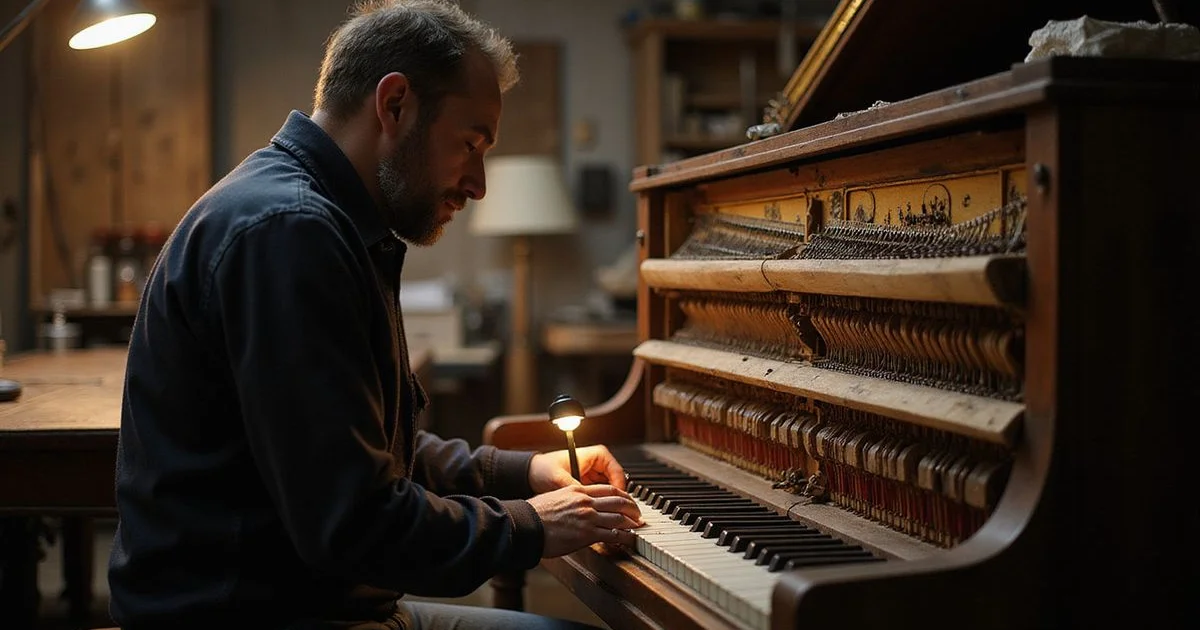
Knowing What to Look For
We frequently see buyers ask what to check when buying a used piano before browsing the secondhand instrument market. A used piano requires a physical inspection of its 12,000 internal parts, specifically the soundboard, pinblock, and action.
From the outside, a failing instrument and a perfect one often appear identical.
Our guide serves as a practical used piano checklist for anyone considering a pre-owned instrument. You will learn the exact steps to evaluate these hidden components before you commit to a purchase.
For a route with the risk already removed, see our pre-owned and restored pianos.
The Key Checks: What to Check When Buying a Used Piano
The most vital parts to check are the soundboard, the pinblock, the tuning stability, and the internal action wear. A few crucial parts of a piano tell you most of what you need to know about its health. We always start our technical inspections by looking past the polished exterior wood.
Inspecting the Soundboard
This large wooden panel, typically crafted from solid Sitka spruce, gives the piano its voice. Look closely for visible cracks and check that the wooden bridges are structurally sound.
Our technicians often see serious soundboard repairs exceed £2,000 in the UK. A cracked board severely affects the tone and serves as an instant dealbreaker for most buyers.
Testing the Pinblock
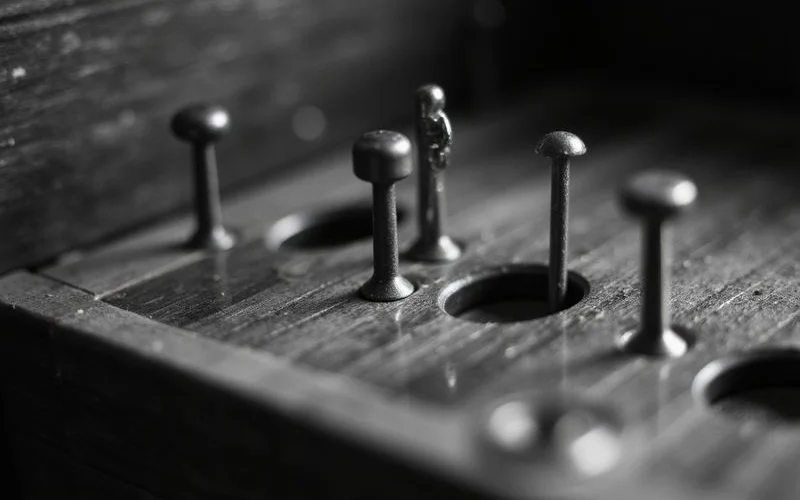
Hidden inside the cabinet, the laminated maple pinblock holds the metal tuning pins tightly in place. If this wood is worn or cracked, the pins cannot grip securely.
The piano will rapidly lose its tune. We consider this one of the most important and easily overlooked physical checks. Replacing a pinblock requires a complete rebuild, often costing well over £5,000 for a grand piano.
Assessing Tuning Stability
A piano that has just been tuned is easy to make sound fine for a quick sale. The real test is whether the instrument actually stays in pitch over a full season. If a seller cannot speak to the tuning history, treat the purchase with extreme caution.
Our current 2026 industry data shows standard UK maintenance costs vary based on the instrument’s condition. Pianos that have dropped significantly below concert pitch (A440Hz) require a double-tuning pitch raise.
| Service Type | Average UK Cost (2026) |
|---|---|
| Standard Fine Tuning | £85 to £120 |
| Pitch Raise (Double Tuning) | £140 to £200 |
Checking Action Wear and Casework
Play every single note from the very bottom bass to the top treble. Listen carefully for sticky keys, uneven response, and notes that fail to repeat quickly. Widespread, uneven wear points to a tired action mechanism that will need expensive professional regulation.
We recommend checking these specific physical details when inspecting a secondhand piano:
- Listen for clicking sounds when pressing the keys.
- Look for deep grooves worn into the felt hammers.
- Check for sluggish dampers that ring out after you release a key.
The exterior casework matters least musically, but it tells a revealing story about the instrument’s life. Scuffs are merely cosmetic, but signs of damp or woodworm suggest the piano has been poorly stored in an unheated environment.
The hidden parts matter most
A piano can look beautiful and still be unsound. The soundboard, pinblock and action decide whether it is a good buy.
Common Faults in Older Pianos
The most common faults are loose tuning pins, dropped pitch, worn action components, and wood damage from central heating. These problems stem directly from environmental fluctuations and years of skipped maintenance. We frequently encounter worn pinblocks in older models that no longer hold tune.
You will also find severely worn internal action parts and major damage caused by damp British weather conditions. Keeping a piano right beside a modern radiator dries out the internal wood rapidly and causes the soundboard to split. None of these faults is visible at a simple glance, which is exactly why a careful physical inspection matters so much.
Our team uses a specific list to identify the most frequent red flags during evaluations. Here are the main internal issues to watch for before buying:
- Loose metal tuning pins caused by a dried-out maple pinblock.
- Moth damage to the internal felt hammers and the soft dampers.
- Cracked spruce soundboards due to underfloor heating without proper humidity control.
- Sluggish or sticking keys resulting from swollen wooden action parts.
Dating a Piano by Serial Number
You can find a piano’s age by matching its serial number, usually located on the iron frame, to a database like the Pierce Piano Atlas. This process dates the instrument fairly accurately and reveals its exact production history. We use these reference guides daily to authenticate the origin of vintage models.
Age alone does not decide whether a piano is worth buying for your home or business venue. A well-built, well-kept older piano from a reputable maker can still serve as an excellent musical investment. Our advice is to use the true age to judge the asking price and set sensible expectations for future maintenance costs.
Many major manufacturers provide free online databases to check these details quickly. We recommend checking these specific locations to verify your instrument:
| Manufacturer | Serial Number Location | Age Verification Tool |
|---|---|---|
| Yamaha | Stamped directly on the gold iron frame | Official Yamaha website database |
| Kawai | Printed near the metal tuning pins | Kawai UK online serial lookup |
| Traditional UK Brands | Varies (often printed on the soundboard) | Pierce Piano Atlas (Book or online) |
Why Dealer Preparation Removes the Guesswork
Dealer preparation guarantees that the soundboard, pinblock, and tuning have already been assessed and repaired by a professional. Carrying out these complex checks properly takes a trained eye, and most buyers understandably do not have one.
That is the real value of buying a prepared secondhand piano directly from an established dealer. We spend hours inspecting and refining each instrument before it ever reaches the showroom floor.
Every pre-owned piano in our inventory has already been through this exact rigorous inspection process and the extensive work that follows. The vital components have all been carefully assessed and made right by a qualified technician.
If you are still wondering what to check when buying a used piano, the stressful guesswork has been completely done for you. To weigh that peace of mind against the risks of a private purchase, read our guide to buying a used piano from a dealer or a private seller.