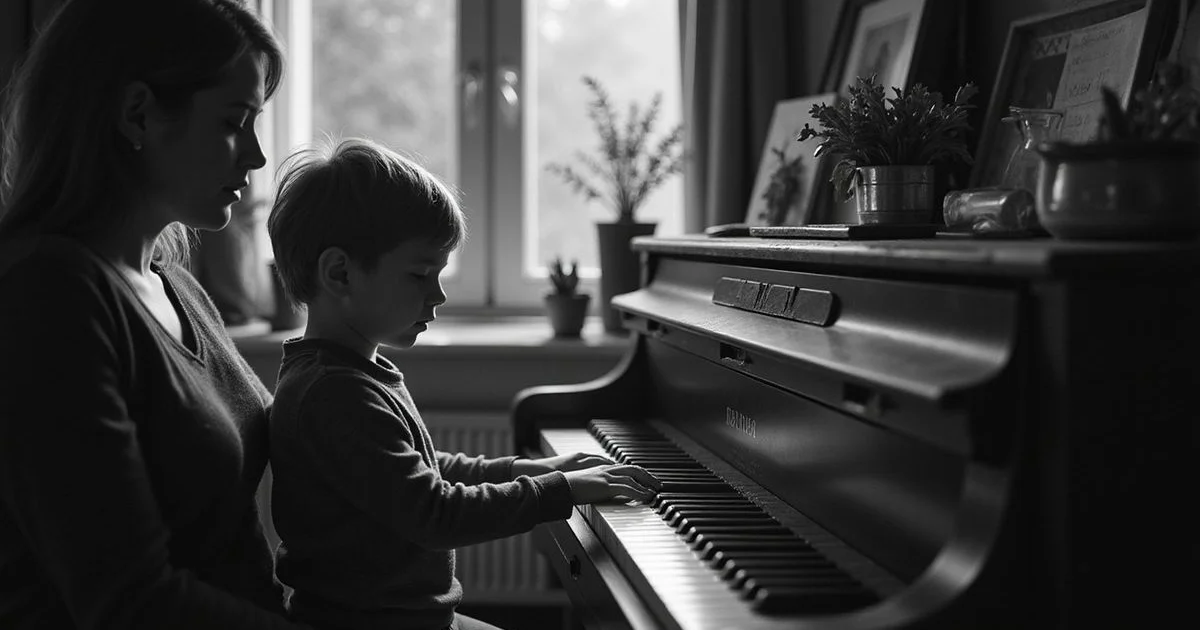
Giving a Young Learner the Best Start
We often see homeowners invest heavily in lessons, only to compromise on the instrument their child plays every day.
UK music education data reveals a startling fact. The condition of the piano is frequently cited as the primary reason for early dropouts before reaching Grade 1.
We know that a frustrating, unresponsive keyboard quietly teaches bad habits and kills motivation.
Finding the best piano for a child does not require spending a fortune, as you will see by exploring our new piano range.
The upcoming sections will break down the exact technical requirements every beginner piano must have. We will compare digital versus acoustic options and outline exact UK pricing for 2026.
What a Beginner Child Actually Needs
A young learner actually needs two specific mechanical features to succeed: a consistent touch weight and highly stable tuning. These elements provide honest feedback to developing fingers and ears.
We recommend looking for an acoustic piano with an average key downweight of around 50 grams when choosing a first piano for a beginner. This specific resistance allows a child to build finger strength without causing fatigue. An uneven or sticky action forces them to adjust their technique to the piano, which makes practice incredibly frustrating.
We find that a piano must hold the international A440 concert pitch standard to be truly effective. Stable tuning matters just as much because a student is actively training their ear. If an instrument drifts flat, it quietly teaches the child a false sense of pitch.
The instrument is a teacher too
A well-prepared, well-tuned piano supports good habits with no effort. A poor one works against the child every time they sit down.
Why an Acoustic Piano Helps
An acoustic instrument acts as a superior piano for a child learning because it provides a fully weighted physical mechanism and natural string resonance that digital keyboards cannot perfectly replicate. A cheap unweighted keyboard might seem sensible for the first few weeks, but most learners outgrow it rapidly.
We regularly see students struggle with aural tests in exams when they practice exclusively on basic electronic keyboards. An acoustic piano builds real finger independence through its complex internal action. Brands like Kawai use an Ultra-Responsive ABS action that gives a highly accurate strike against the strings.
We have listed the core benefits of starting on a real acoustic instrument to clarify the differences:
- Proper Escapement: The mechanical let-off feel helps children learn dynamic physical control.
- Infinite Polyphony: Acoustic strings ring out naturally rather than dropping notes like entry-level digital processors.
- Technique Building: The physical weight prepares students for the demands of higher playing grades.
- Aural Development: Natural overtones train the ear to recognise complex harmonies.
The richer, physical sound of an acoustic model also keeps a child engaged. Practising on an instrument that sounds beautiful is naturally more rewarding.
Budget-Appropriate Options for a First Piano
A dependable, entry-level new acoustic upright serving as a childs first piano in the UK currently requires a budget of around £2,800 to £3,500. This price range gives a young learner a modern instrument with a long warranty.
We always guide families to proven, compact models rather than obscure, unverified brands. New uprights like the 109cm Yamaha b1 start around £2,850 and provide exceptional value. Another highly respected option is the Kawai K-15E, which retails near £3,200 and offers a slightly warmer tonal character.
We suggest looking into fully prepared pre-owned pianos if your budget is tighter. You can explore the exact models to look for in our guide covering the best used pianos for beginners.
The following table provides a quick comparison of the two most popular compact uprights for 2026:
| Feature | Yamaha b1 | Kawai K-15E |
|---|---|---|
| Height | 109cm | 110cm |
| Action Type | Wooden balanced action | Ultra-Responsive ABS |
| Tonal Profile | Bright and clear | Warm and mellow |
| Approx. 2026 UK Price | £2,850 | £3,200 |
We believe the instrument must feature an even action and reliable tuning, regardless of the badge on the fallboard. That is what genuinely supports a child during those crucial early months. Excellent preparation easily outperforms a famous brand name on a poorly maintained instrument.
Leaving Room to Grow
Parents often make the mistake of buying the smallest, cheapest instrument just to see if the lessons stick. A poor instrument actually makes early quitting far more likely, and a talented child will quickly need a replacement anyway.
We highly recommend choosing an instrument with enough tonal depth to carry a student through their early assessments. The Associated Board of the Royal Schools of Music grading system in the UK demands increasing dynamic control from Grade 1 through Grade 8. A good beginner upright will comfortably support a learner up to at least Grade 4 or 5.
Planning for ABRSM Grade Exams
We know that progressing through the UK grading system requires an instrument that responds to subtle changes in touch. A basic keyboard simply cannot produce the varied tone colours needed for intermediate pieces. That makes a quality acoustic piano the more economical choice over the long term.
We invite you to bring your child to our Harrogate showroom to test this difference in person. They can play a few instruments in a relaxed setting to see what feels right. The hands-on experience makes choosing the correct model much easier. Our team will help you find the best piano for a child, guaranteeing the ideal start for your family.