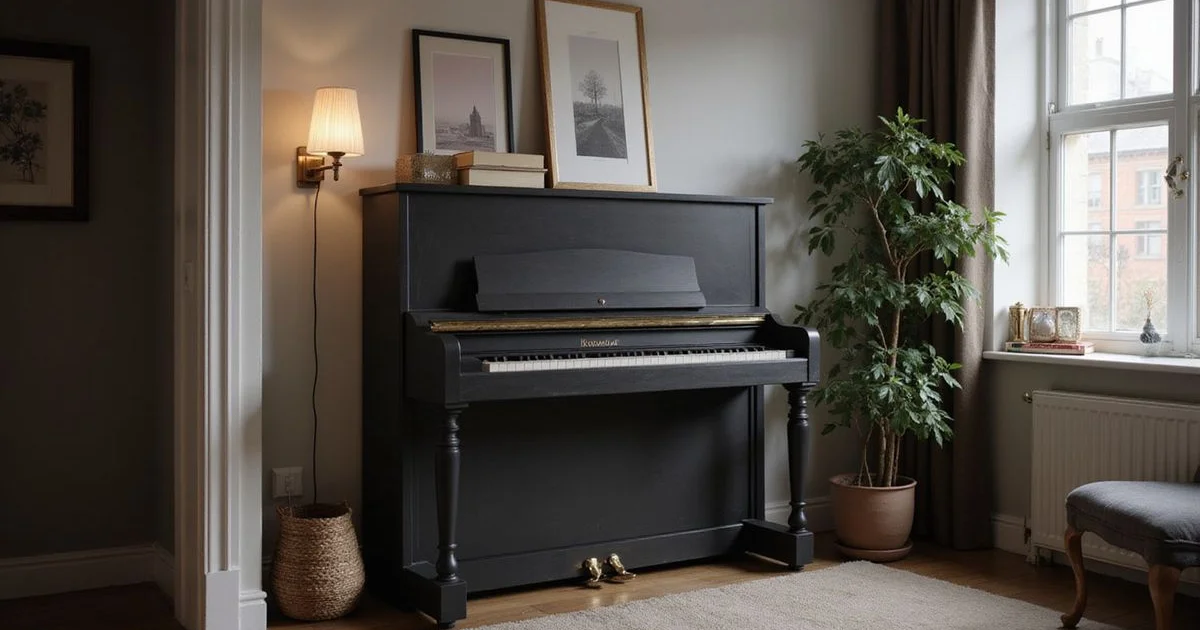
A Small Room Is No Barrier to a Real Piano
We hear the same concern every week from clients living in city apartments who are searching for the best piano for a small room. The simple truth is that an acoustic piano fits perfectly into a compact home, provided you select the right dimensions and control your room’s acoustics.
Our professional service team understands this hesitation completely, especially since the average new UK flat provides just 50 square metres of living space.
The good news is that a smaller space rarely rules out a fine instrument.
We know it simply changes which piano you should choose, and you will find well-suited models within our new piano range.
Let’s review the data on spatial requirements and explore practical ways to respond. We will break down compact upright dimensions, explain how room acoustics work, and highlight specific models that thrive in smaller homes.
Compact Upright Dimensions
For a small room, the upright is the natural format. A compact upright requires less than one square metre of floor space, making it highly practical for flats.
Our guide to upright versus grand pianos explains the mechanical differences in more depth. What matters most here is the exact footprint and how it interacts with your living area.
An upright piano sits flat against a wall, making it an excellent piano for an apartment. You only need to plan for a few basic dimensions:
- Width: Standard 88-key keyboards require roughly 148 to 150 centimetres of wall space.
- Depth: Most compact models extend just 54 to 60 centimetres into the room.
- Height: Smaller cabinets range from 109 to 110 centimetres, keeping the sightlines clear.
- Seating: Allow an extra 60 centimetres of depth for the stool and the player.
We frequently recommend the Yamaha b1 because it features a depth of just 54 centimetres. This compact footprint takes up the same floor area as a small writing desk. Lower cabinet heights also stop the instrument from feeling imposing in a snug room, allowing it to sit comfortably under a window.
Measure before you fall in love
Note the wall space available and the route into the room before you visit. It turns a vague worry into a simple, solved question.
How Size Affects Sound
A larger piano features longer strings and a bigger soundboard, which naturally produces a higher volume of sound. A smaller piano generates a balanced decibel level that comfortably fills a flat without causing acoustic overload.
We always remind clients that acoustic energy needs space to dissipate. A concert grand might move massive volumes of air, but a smaller upright uses shorter bass strings to limit the maximum sound output. This prevents the sound from becoming deafening and muddy inside a standard four-by-four metre living room.
The instrument produces a clear sound that fills the space without overwhelming it. This balanced volume makes practice much more comfortable for the player and for everyone else at home. You do not need a massive soundboard to get a satisfying tone; you simply need one suited to the acoustics of the property.
The Role of the Soundboard
The soundboard acts as the physical speaker of the piano, amplifying the vibration of the heavy strings. Compact models use highly efficient soundboard materials to maximise tonal quality within a smaller timber cabinet.
We suggest looking closely at the internal materials used in these smaller instruments. For example, the Kawai K-15E uses a solid spruce soundboard to deliver a rich, resonant tone despite its modest 110-centimetre height. This specific component proves that you can achieve exceptional sound clarity without sacrificing your precious floor space.
Placement and Acoustics
A small room tends to be acoustically lively, especially with hard floors and bare walls. You can easily fix harsh reverberations by placing a thick rug under the piano and softening the room with everyday furnishings.
We often see buyers worry about the volume of their new instrument before addressing the room itself. Sound waves bounce rapidly off flat surfaces, making a piano seem much louder and harsher than it really is.
You can absorb high frequencies and reduce the room’s reverberation time without buying professional studio foam. Consider adding these simple acoustic dampeners to your space:
- Thick Wool Rugs: Place a heavy rug directly under the piano to absorb downward sound waves.
- Heavy Curtains: Drape thick fabric over nearby windows to stop high frequencies from reflecting off the glass.
- Soft Seating: Sofas and fabric armchairs act as excellent natural bass traps.
- Bookcases: An open shelf filled with varying sizes of books scatters sound waves efficiently.
Position the piano against a wall rather than floating it in the middle of the room. This placement is practically efficient and acoustically kinder, as it directs the sound outward into the newly treated space.
Humidity and Wall Positioning
Where you place the piano dictates how well the instrument stays in tune over the years. You must keep the piano against an interior wall with a steady room humidity between 40 and 60 percent to prevent the wood from drying out.
We highly recommend monitoring the environment around your acoustic piano carefully. UK homes with central heating experience significant humidity drops during the winter months, which can severely damage delicate wooden components.
To maintain perfect tuning stability between service appointments, follow these strict placement rules:
- Target Ideal Humidity: Use a digital hygrometer to keep the room’s moisture levels tightly between 40 and 60 percent.
- Manage the Temperature: Aim for a consistent room temperature of roughly 20 degrees Celsius year-round.
- Avoid Direct Heat: Keep the instrument far away from working radiators, space heaters, and open fireplaces.
- Utilise Internal Walls: Position the piano against an inside partition wall, as external brick walls tend to transfer cold and dampness.
In a small flat, hitting these environmental targets is easy to get right with a quick moment of planning. It makes a massive difference to how stable the piano stays and protects your financial investment.
Suitable Compact Models
Both Yamaha and Kawai make excellent compact upright models designed specifically with smaller homes in mind. Instruments like the 109-centimetre Yamaha b1 provide genuine acoustic tone within a highly restricted cabinet size.
We have gathered the exact specifications of two highly popular choices to help you compare their physical features. These models consistently deliver great value and reliable performance for space-conscious players looking for a small piano for a flat.
The Best Piano for a Small Room: Comparing Top Compact Uprights
| Feature | Yamaha b1 | Kawai K-15E |
|---|---|---|
| Height | 109 centimetres | 110 centimetres |
| Width | 149 centimetres | 149 centimetres |
| Depth | 54 centimetres | 59 centimetres |
| Soundboard | Laminated Spruce | Solid Spruce |
| Ideal For | Tightest spaces, bright tone | Richer tone, slightly deeper space |
The best way to judge these subtle differences is to play the instruments in a physical setting you can picture in your own home. You need to feel the mechanical action of the keys and hear how the soundboard responds to your individual touch.
Visit our Harrogate showroom today, and tell us about your room dimensions. We will show you the exact compact instruments that suit your space perfectly. A small space deserves a real piano too, and finding the best piano for a small room is entirely possible with the right guidance.