The Most Common Piano Decision
We often see buyers settle on choosing a new acoustic instrument, only to face the inevitable next question.
That question is usually the classic upright vs grand piano debate. It is a serious decision that goes far beyond just your budget.
Our team created this guide to compare the two formats honestly and help you make the right choice. You will find both of these styles fully represented within our new piano range.
Neither format is universally superior. We know they are simply different instruments suited to different homes and players across the UK.
Space and Dimensions
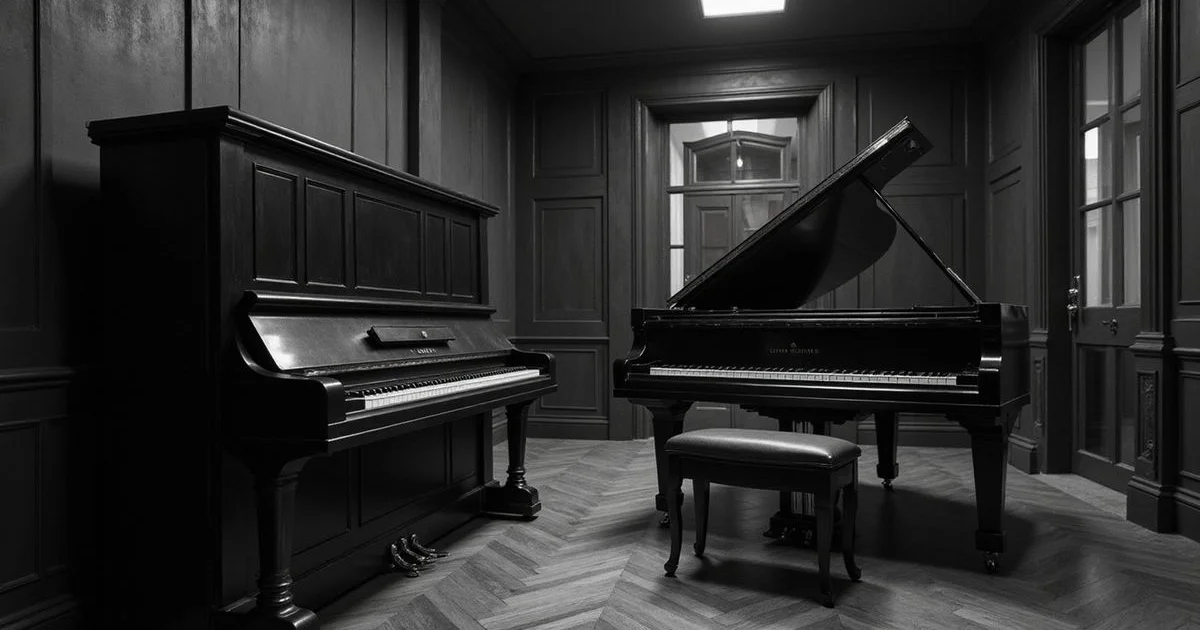
The most obvious difference between a grand or upright piano is the physical shape and footprint of the instrument. Upright models stand tall and sit flat against a wall, whereas grand models extend horizontally into the room.
Our experience shows that most standard uprights use very little floor space. They take up roughly the keyboard’s width and around 60 centimetres of depth. That compact size makes them suited to almost any home in the UK.
We always follow the Yamaha Corporation spacing guidelines for proper installation:
- Leave 10 to 15 centimetres between the back of an upright and the wall.
- Ensure this small gap allows the sound to escape properly.
- Allow space for air to circulate freely around the soundboard.
Our technicians note that a grand lies horizontally, its body extending significantly out into the living space. Even a smaller baby grand needs extra floor space, as these models measure around 150 centimetres in length. You must also add roughly 100 centimetres of clearance for the player and the bench.
We cover these specific spatial requirements further in our guide to buying a piano for a small room. If space is tight, the vertical option wins easily.
| Feature | Upright Piano | Grand Piano |
|---|---|---|
| Floor Space | Minimal, sits against a wall | Substantial, extends into the room |
| Clearance Needed | 10-15 cm from the wall | 100 cm for the player |
| Action | Vertical, very good in fine models | Horizontal, faster repetition |
| Tone | Warm and full, well suited to homes | Fuller, more open, more projection |
| Price from (2026) | £2,500 | £9,500 |
Action and Tone
The deeper difference lies in how the two instruments actually play and project sound. A grand uses a horizontal action that relies on gravity, while an upright uses a vertical action with spring-assisted returns.
Upright vs Grand Piano Action Mechanics
Our pianists find that action speed is a major factor for advancing players. Grand pianos feature a “double escapement” system originally invented by Sébastien Érard. This mechanism allows the hammer to reset partially without the key coming all the way up.
We appreciate how that design grants you faster, cleaner repetition and a highly responsive touch. An upright uses a vertical action where springs help the hammers return to their resting position.
In the better models, this vertical action is genuinely good. Our customers mostly find it more than capable for daily practice and performance.
Tone and Soundboard Differences
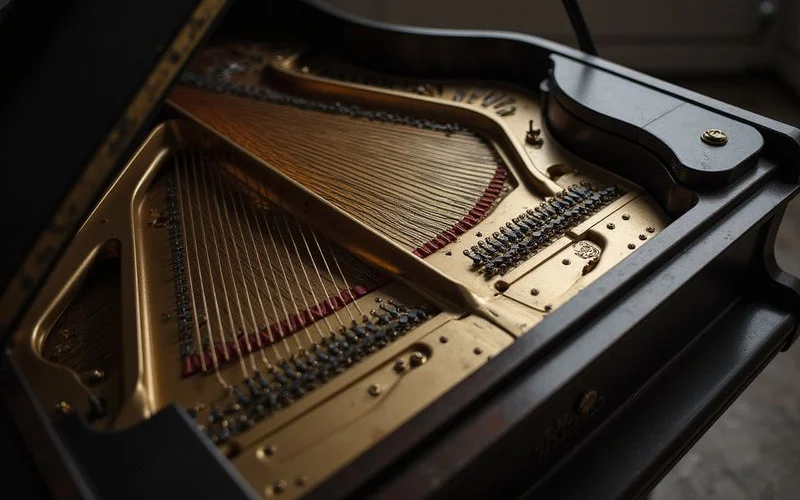
Grands possess longer strings and a much larger soundboard to produce a rich tone. The open lid reflects the sound upwards and outwards, giving a fuller, more open projection.
We think an upright produces a warm, satisfying tone that suits a home beautifully. The soundboard sits vertically against a wall, which slightly muffles the rear projection.
That placement actually prevents the volume from overwhelming a smaller domestic room.
Price and Player Level
A new upright typically ranges from £2,500 to around £12,000, while a new grand starts at £8,000 and rises well over £45,000. The higher price of a grand reflects the increased material costs and more complex engineering, rather than just a simple retail markup.
Our team closely tracks the UK market to provide accurate 2026 price expectations:
- An industry-standard new upright like the Yamaha U1 costs around £10,800.
- A reliable new baby grand starts closer to £9,500 for entry-level brands.
- Mid-range grand options like the Yamaha C2X easily exceed £20,000.
- Reconditioned upright models offer excellent value in the £3,000 to £5,000 range.
We know both formats suit everyone from a complete beginner to an advanced professional. A beginner certainly does not need a grand to learn effectively.
Our teachers assure students that an advanced player is never let down by a fine upright at home. Many music schools and conservatoires rely exclusively on high-quality uprights for their practice rooms. The decision is far more about your room size and budget than your playing ability.
Match the piano to the room and the budget
If you have the space and the budget, a grand is a real pleasure. If you do not, a fine upright is a wholehearted choice, never a consolation.
Why Trying Both Side by Side Helps
Specifications only take you so far when evaluating an instrument. The feel of an action and the colour of a tone are highly personal choices.
Our experts always encourage buyers to sit down and play the instruments in person. Two pianos that look identical on paper can play quite differently in reality.
We recommend testing these specific elements when you sit at a piano:
- The touch weight of the keys during rapid passages.
- The brightness of the sound across different octaves.
- The dynamic range between soft and loud playing.
Play the exact same passage of music on each piano.
The difference between upright and grand becomes obvious in a way no written description can match.
Our private viewing rooms are designed for exactly this purpose. Visit our Harrogate showroom to play an upright and a grand back to back. Let your own hands and ears settle the upright vs grand piano question once and for all.