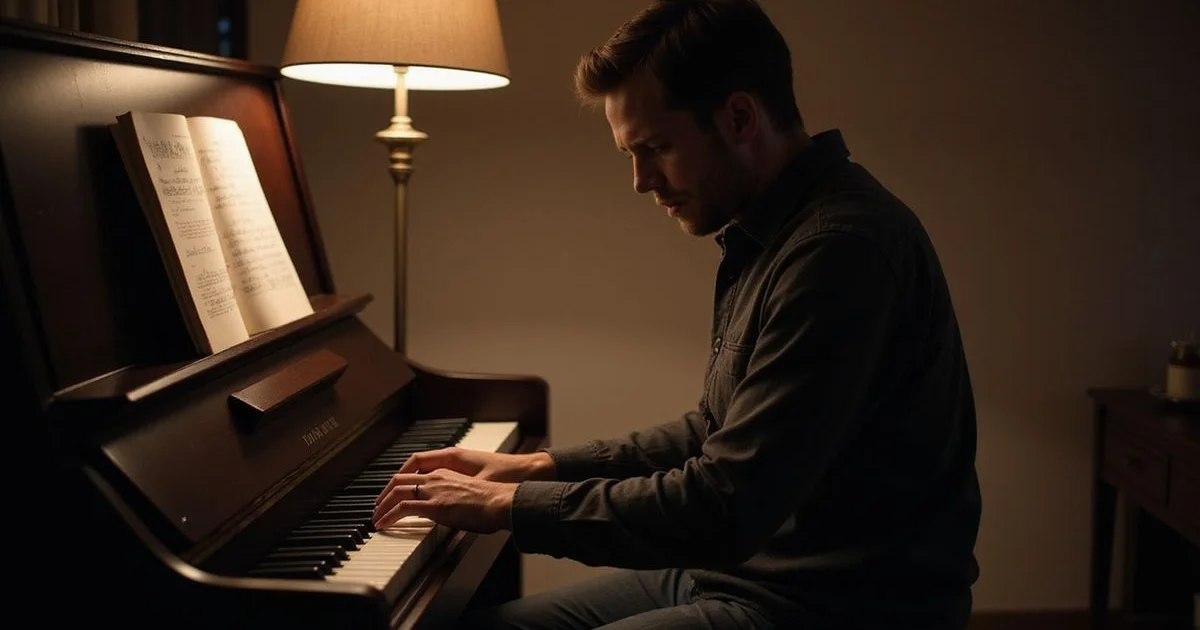
Buying a Piano as an Adult Is a Different Decision
We know that selecting the best piano for adult learners is a deeply personal process, quite different from picking out a child’s first keyboard. Adults bring clearer taste, a more analytical ear, and a specific vision for their music. That refined preference means you need an instrument that truly responds to your touch.
Our specialists recommend testing models that offer a professional feel without overwhelming a typical UK living space.
You will find well-suited instruments within our new piano range.

Whether you are starting fresh or looking for a piano for returning to play after many years, this guide will help you choose an instrument that rewards you now and keeps rewarding you as you progress. We focus on three critical areas to ensure your investment sustains your daily practice habit:
- Physical footprint in a typical home.
- Action responsiveness and touch weight.
- Tonal range and expressive capacity.
Why Adults Often Want Quality Sooner
A child beginning lessons can be perfectly served by a modest starter instrument, but a mature student requires something more capable. You listen more critically, you know what music you love, and you can hear the difference between a flat, lifeless piano and a responsive, singing one. Our experience shows that cognitive understanding usually outpaces muscle memory for older beginners. Adult students quickly grasp complex theory, yet they need a highly forgiving and responsive acoustic action to translate those ideas into actual sound.
This means quality tends to matter sooner for an adult. An instrument with a refined touch and a beautiful tone makes practice a pleasure rather than a chore. We find that for an adult fitting practice around a busy life, that daily enjoyment is what keeps you coming back to the keys. Recent 2026 studies on adult education highlight that intrinsic motivation drops sharply if the physical tools cause frustration.
The piano should invite you to play
The best instrument for an adult learner is the one that makes you want to sit down at the end of the day. Enjoyment is not a luxury here. It is what sustains the habit.
For this reason, many teachers point their mature students directly toward industry-standard uprights. Three highly regarded options consistently lead the market in 2026 for their reliable performance:
- Yamaha U1: A 121cm tall classic that offers outstanding engineering and brilliant highs.
- Kawai K-300: Known for its warmer tone and slightly taller 122cm cabinet.
- Yamaha U3: A 131cm option for those wanting maximum string length and deep bass.
Touch and Tonal Range
Two qualities matter most for a developing adult player: a responsive action and a wide tonal range. We regularly demonstrate these concepts using a standard 50-gram static downweight, which is the benchmark for a balanced acoustic piano touch.
The Importance of a Responsive Action
A highly responsive action repeats cleanly and answers small changes in your fingers. As your control improves, the piano keeps up without forcing you to press harder than necessary. Our technicians often notice that cheaper digital models suffer from inconsistent resistance, which can hinder the development of proper technique. A vague action puts a quiet ceiling on your progress and can even contribute to wrist fatigue. Manufacturers like Kawai address this directly with composite parts, such as their Millennium III action, which provides exceptional stability and control.
Achieving a Wide Tonal Range
A wide tonal range means the instrument can play genuinely softly and genuinely fully, offering a spectrum of colour in between. We always advise adults that expressive playing requires an instrument capable of multiple dynamics. If your piano only manages one volume level, your practice will quickly become frustrating. Solid spruce soundboards, found in quality models like the Kawai K-300, project a much richer variety of tones compared to laminated alternatives.
Upright or Grand for an Adult Learner
For most adult players at home, a good upright is an excellent and sensible choice. The finer uprights offer a satisfying touch and a rich tone that will serve you for many years. We frequently measure living spaces with clients, finding that an adult beginner piano needs to fit comfortably alongside existing furniture. A standard Yamaha U1 upright has a footprint of 153cm wide by 62cm deep, which sits easily against a standard UK living room wall.
To help visualise the physical differences, here is a quick comparison of typical dimensions:
| Feature | Professional Upright (e.g., Yamaha U1) | Small Baby Grand |
|---|---|---|
| Width | 153cm | 146cm - 150cm |
| Depth (Floor space) | 62cm | 150cm - 160cm |
| Action Orientation | Vertical | Horizontal |
A grand piano naturally offers more, including a faster horizontal action and a fuller, more open sound. If you have the room and the budget, and you intend to play seriously, a grand is a real joy. Our team recommends measuring carefully, as even a small baby grand extends at least 150cm into the room. Do not feel a grand is strictly required for success.
Our guide to upright versus grand pianos sets out the trade-offs honestly. A fine upright is never a compromise.
Balancing Budget and Long-Term Enjoyment
It is worth thinking of an adult’s piano as a long-term companion. You may well play it for decades, so it is usually wiser to buy a little better and keep it than to buy cheaply and feel the limits within a year or two. We monitor UK market prices closely to help buyers plan their investment. In 2026, a brand-new Kawai K-300 sits around £4,800 to £5,300, while a new Yamaha U1 commands closer to £8,000.
Buying brand new brings several immediate benefits:
- A comprehensive manufacturer warranty.
- A pristine, unmarked cabinet finish.
- The very latest internal action components.
A prepared pre-owned instrument brings outstanding value and, often, real character. Our technicians fully refurbish used U1 models, which can bring the price down closer to the £3,000 to £4,000 range. Both options can be the right answer, as the deciding factor is your budget rather than your skill level.
For those needing to practice discreetly, modern technology offers a fantastic solution. We highly recommend considering a model with a silent system, such as Yamaha’s SH3 or TA3 TransAcoustic. These systems allow you to mute the acoustic strings and listen through headphones, making late-night sessions possible without waking the household.
The surest way to choose is to play. Visit our Harrogate showroom, take your time in a quiet viewing room, and bring music you love. The piano that makes that music sound its best is the one to take home.