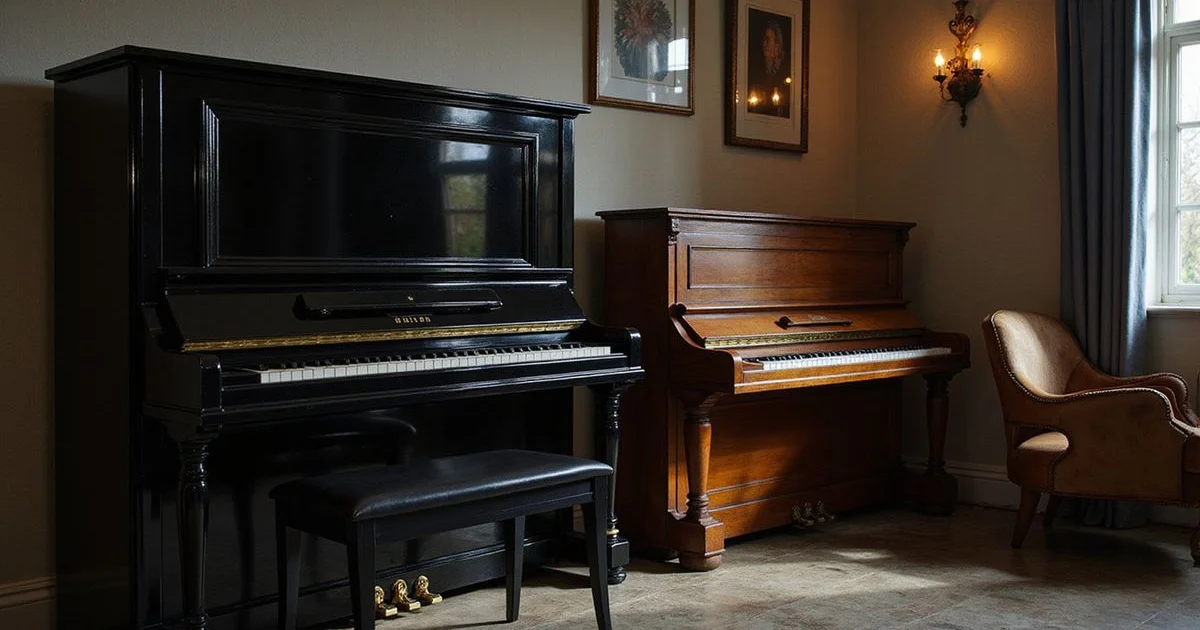
The First Real Fork in the Road
We see this reality in the showroom every single day. The UK piano market has continued its steady growth into 2026. This means more players than ever are facing this exact dilemma.
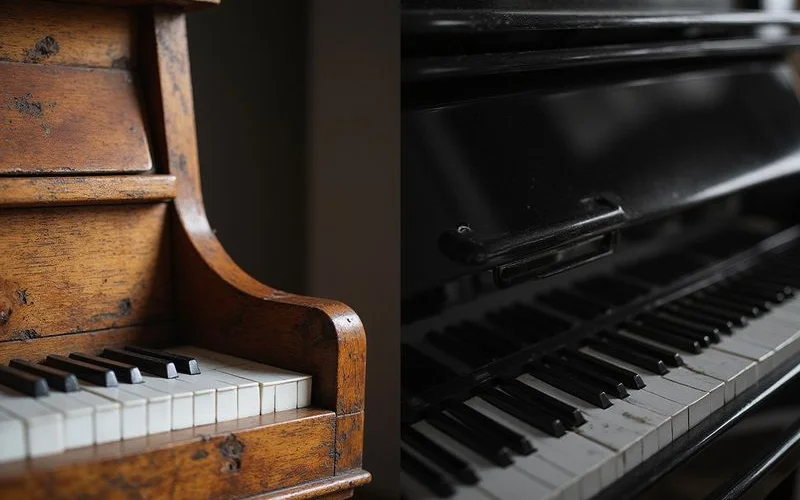
Our team finds that people often feel torn between modern reliability and vintage charm.
When you are looking at a new vs used piano, the right choice simply depends on what you value most.
Both our new pianos and our pre-owned and restored pianos are fully prepared instruments. Let us look at the data and what it actually tells us. Then, you can use these facts to decide with total confidence.
Cost and Warranty
The clearest difference between these paths is the price and the guarantee attached to it. New uprights start around £2,500 and new grands at £8,000, while prepared pre-owned pianos begin around £800. For many families, a pre-owned instrument simply makes a high-quality piano affordable, and our guide to how much a piano costs sets out the full price picture.
Consider the industry-standard Yamaha U1. A brand-new Yamaha U1 currently retails for over £9,000 in the UK. By contrast, you can often find a fully reconditioned 1980s U1 model for between £4,000 and £5,000. This presents a substantial saving for a highly capable instrument.
Our experts always remind buyers to factor in the warranty. A new piano brings a 5 to 10-year manufacturer warranty, providing complete reassurance with no hidden history. Buying a prepared pre-owned piano from a showroom offers its own peace of mind, as a qualified technician has already assessed and serviced it.
| Consideration | New Piano | Pre-Owned & Restored |
|---|---|---|
| Starting price | From £2,500 | From £800 |
| Premium example (Yamaha U1) | Over £9,000 | £4,000 to £5,000 (reconditioned) |
| Warranty | Full 5 to 10-year cover | Assessed and prepared; cover varies |
| Choice of finish | Wide, current ranges | Curated based on showroom stock |
| Character | Modern, consistent | Often warmer, with distinct heritage |
Value Retention
People often worry about what an instrument will be worth later when choosing a new or secondhand piano. A new piano takes its steepest drop in value during its first few years.
Much like a car, a new acoustic piano follows a predictable depreciation curve:
- Year 1: Loses roughly 20% to 22% of its value.
- Year 5: Retains about 65% of its original purchase price.
- Year 10 and beyond: Value stabilises and holds firm.
We advise clients that a pre-owned piano has already absorbed that early drop. A sensibly bought restored vintage piano can be remarkably stable in value. Its financial worth rests entirely on the quality of the restoration and the soundboard, rather than on being the latest model.
Certainty of Condition
With a new piano, the condition is incredibly simple because the instrument is flawless. With a used piano, condition is everything, and this is exactly where buyers feel the most nervous.
Preparation removes the risk
A pre-owned piano from a showroom is not an unknown quantity. It has been inspected, made right and tuned by a qualified technician. The uncertainty of a used piano only really exists in unchecked private sales.
That quote captures the absolute heart of the matter. The difference between a risky used piano and a sound one is not age, but professional preparation.
Our technicians see the hidden costs of unchecked private sales every single week. If you buy a neglected instrument, you will face steep repair bills very quickly.
Hidden Costs of Unchecked Pianos
To put this into perspective, consider these average UK repair costs for 2026:
- Action Regulation: Fixing a sluggish mechanism or “double-striking” hammers requires a full-day regulation, costing between £400 and £550.
- Pitch Raises: A piano that has sat untuned for years will need a pitch raise, which typically costs £140 to £200.
- String Replacement: Rusted bass strings cost around £50 each to replace.
You can avoid these surprise invoices entirely by purchasing a showroom-prepared instrument.
The Appeal of Restored Character
There is one distinct thing a new piano cannot offer, and that is historical heritage. A restored vintage piano from a celebrated UK maker such as Steinbach, Kemble, or Knight carries a unique warmth of tone. For many buyers, this mature character is the primary reason for choosing a used instrument.
We frequently restore classic models like the Knight K10, which piano tuners revere for its incredibly solid build quality and resonant soundboard. These older instruments often feature premium materials that are virtually impossible to source in modern manufacturing:
- Solid casework: Built from heavy, resonant timber rather than modern composite boards.
- Rare veneers: Finished with authentic, original mahogany or walnut.
- Aged soundboards: Decades of settling frequently produces a richer, more mellow acoustic profile.
Buying a used piano vs new often comes down to falling in love with this specific sound. This craftsmanship gives the piano a beautiful physical presence in your home.
Who Each Option Suits
A new piano perfectly suits buyers who want a comprehensive warranty, a current model, and a specific choice of modern finish. A pre-owned or restored piano strongly suits beginners and families working to a budget.
This secondhand route is also the perfect match for anyone drawn to the distinct, warm character of an older instrument. If you later want to upgrade, a part exchange can beautifully bridge the two options. This strategy lets your first piano contribute financially toward a better one down the line.
Making Your Final Decision
We always recommend asking yourself a few key questions before deciding:
- Do you prioritise a 10-year warranty over a lower initial price?
- Are you looking for a specific cabinet style to match your modern decor?
- Does the rich history and mellow tone of a heritage brand appeal to you?
The choice rests entirely in your hands. Whichever way you are leaning, the best next step is to come and play both kinds side by side in our Harrogate showroom.