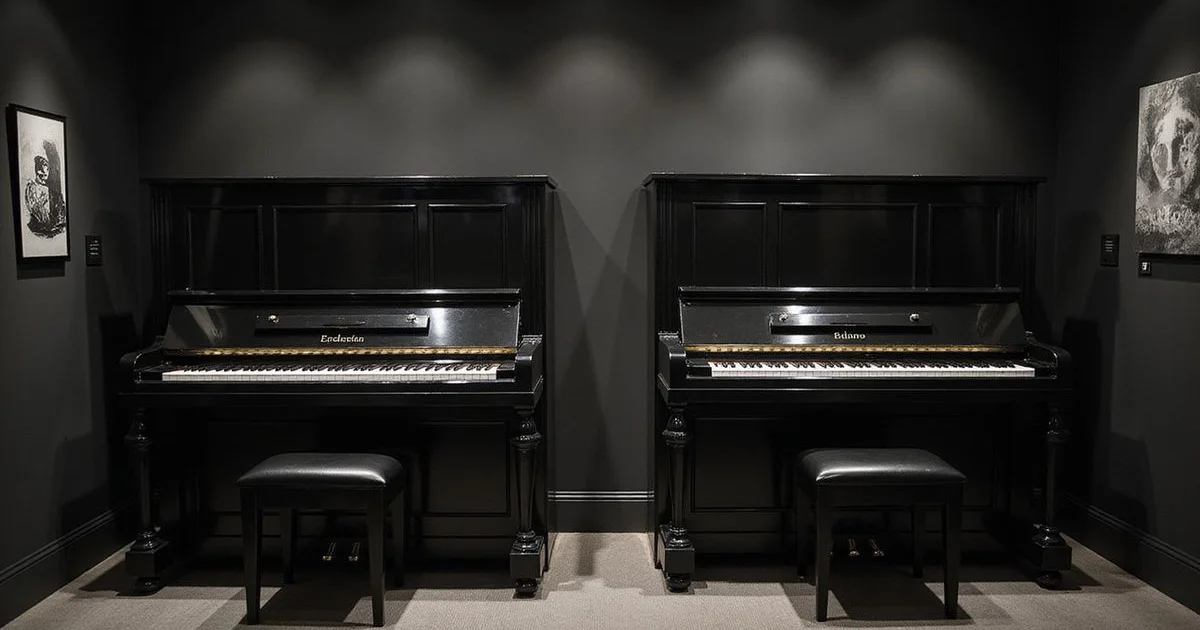
Two Outstanding Makers, One Personal Choice
You know how the choice between two premium options often stalls a project? We regularly see homeowners and business owners face this exact hurdle with yamaha vs kawai pianos.
Both Japanese manufacturers produce incredibly reliable acoustic instruments, but their distinct personalities often confuse first-time buyers. Our team operates as an authorised dealer for both of these industry leaders, giving us a front-row seat to this classic debate.
You will find both options within our new piano range, which makes side-by-side comparisons much easier.

Many buyers assume the spec sheet will reveal a clear winner.
The reality is that choosing the best piano brand always comes down to matching the instrument’s unique acoustic signature to your specific room. Let’s look at the data behind their tonal differences, compare their pricing, and explore a few practical ways to choose the right fit.
Tonal Character
The clearest difference between the two makers is their acoustic tone. Yamaha pianos are widely known for a clear, bright, and precise sound profile. Notes speak quickly and definitely when you strike the keys.
This crisp articulation rewards players who focus on specific genres:
- Fast classical sonatas
- Contemporary pop music
- Jazz and blues arrangements
Our technicians find that Yamaha’s use of hornbeam and maple hammers contributes to this bright clarity. Rooms with heavy carpets or soft furnishings pair beautifully with this projecting sound.
Kawai pianos offer a contrasting tonal character. They lean to a warmer, rounder sound with a mellow colour. Mahogany double-felted hammers help create this singing, lyrical quality.
We often recommend Kawai models for expressive, romantic classical playing. Hardwood floors and minimalist rooms benefit greatly from this softer acoustic profile. Neither tonal character is incorrect, as the right choice depends entirely on which sound captures your ear.
Action and Touch
The action is the intricate mechanical system that your fingers control. Yamaha and Kawai approach this engineering challenge differently.
Yamaha actions deliver a crisp, direct, and defined response. The company uses traditional wooden mechanisms refined over decades of manufacturing. Our clients often describe the Yamaha touch as highly predictable and stable.
Kawai actions feel slightly lighter and smoother under the fingers. Kawai replaced traditional wood with ABS-Carbon composite materials in their Millennium III action.
Touch is felt, not read
You can read about an action all day, but you only really know it once your own fingers are on the keys. A few minutes of playing tells you more than any description.
This modern composite resists swelling and shrinking during humidity changes. We see fewer sticking keys on Kawai models during damp British winters.
Model Ranges and Price
Both makers offer a wide catalogue of instruments for various budgets. Prices broadly overlap across their starter uprights and professional grand pianos.
Our 2026 pricing data shows a new upright from either brand sits within the £4,800 to £12,000 band. New grand pianos generally start from £12,000 upward. This helpful overlap means your choice rarely comes down to cost alone.
You can easily compare equivalent models side-by-side. The popular 121cm upright category provides a perfect example of this direct competition.
Comparing the Yamaha U1 and Kawai K-300
We frequently see buyers comparing the Yamaha U1 and the Kawai K-300. These are the two best-selling professional uprights in the UK market. The U1 is the industry standard for durability, while the K-300 offers exceptional value.
| Feature | Yamaha U1 | Kawai K-300 |
|---|---|---|
| Height | 121 cm | 122 cm |
| Action Material | Traditional Wood | Millennium III ABS-Carbon |
| Hammer Felt | Hornbeam / Maple | Mahogany Double Felted |
| Average UK Price (2026) | ~£7,395 | ~£4,895 |
This side-by-side view highlights the price advantage of the Kawai K-300. The Yamaha U1 requires a larger initial investment.
We find that the Yamaha often holds its resale value slightly better over time. Your decision finally returns to your hands and your budget.
The Grand Piano Market
The competition continues into the professional grand piano market. Yamaha’s CX series and Kawai’s GX series are the two dominant choices for UK venues and advanced players.
We often supply the Yamaha C2X or the Kawai GX-2 to local recording studios. Both instruments measure around 5’8” to 5’11” in length, providing excellent bass depth without overwhelming a standard room.
The Yamaha C2X features European spruce soundboards for a rich, projecting tone. The Kawai GX-2 features extended key pivot lengths, giving pianists greater expressive control during quiet passages.
Build Quality and Reputation
Both brands have earned stellar reputations for consistency and durability. A piano from either maker will give decades of reliable service if properly maintained. You are not taking a risk on quality with either name.
Our tuning staff regularly service 40-year-old Japanese pianos that still play perfectly. Yamaha builds their professional models, like the U series and CX grands, at their Hamamatsu factory. This facility pioneered modern precision manufacturing in the piano industry.
Kawai produces their professional K series and GX grands at their world-renowned Ryuyo facility. Kawai even includes a 10-year factory warranty on new acoustic models in the UK. This warranty provides immense peace of mind for business owners purchasing for venues.
Inspecting Used Models
We advise checking a few specific details if you decide to buy a used model:
- Verify the serial number to confirm the exact manufacturing year.
- Ask if the piano was originally seasoned for the damp UK climate.
- Check the hammer felts for deep grooves caused by heavy playing.
You completely avoid these grey-market concerns when buying new through an authorised dealer. You are simply choosing between two excellent instruments.
Why We Stock Both
Some dealers carry a single brand, and their advice naturally leans that way. We chose to be authorised for both Yamaha and Kawai for a very simple reason. It keeps our advice honest and focused entirely on your needs.
Our sales team has nothing to gain from steering you to one specific name. This impartial position lets us listen closely to your playing style. We can then recommend the piano that genuinely fits your needs.
The comprehensive guide to how to choose a piano for your home sets out that wider process. It covers room dimensions, floor types, and aesthetic preferences. Every detail helps us match you with the ideal acoustic piano.
Matching the Piano to Your Room
Acoustics play a massive role in how a piano sounds in your property. We frequently match the mellower Kawai pianos with modern rooms featuring hardwood floors and large glass windows. These hard surfaces reflect sound and can make a bright piano sound harsh.
Yamaha pianos often shine in rooms with thick carpets, heavy curtains, or upholstered furniture. These soft materials absorb high frequencies. The natural projection of a Yamaha cuts through this absorption beautifully.
We also consider the physical size of your space to ensure optimal sound quality:
- Small rooms (under 100 sq ft): Best suited for digital pianos or compact uprights.
- Medium rooms (100-200 sq ft): Ideal for standard 121cm uprights like the U1 or K-300.
- Large rooms (over 200 sq ft): Capable of supporting grand pianos without overwhelming the space.
Buying an oversized grand piano for a small room will simply overwhelm the space with excessive volume.
Try Them Side by Side
In the end, choosing between a kawai or yamaha piano is a decision best made with your hands.
Visit our Harrogate showroom to play a Yamaha and a Kawai back to back. We maintain a quiet viewing room specifically for this purpose.
Bring the sheet music you know well. Play a fast technical piece, and then try a slow, expressive ballad.
Within a few minutes, one of them will usually feel like yours. Contact the showroom team today to book your private demonstration.